

Introduction
When it comes to SEO, people often debate on-page vs off-page optimization. Both are essential for ranking success — but they focus on very different areas. Let’s break down the differences and how to balance them for maximum impact.
What is On-Page SEO?
On-page SEO refers to the elements you control within your website. It’s about making your content easy to understand for both users and search engines.
Key On-Page SEO Factors:
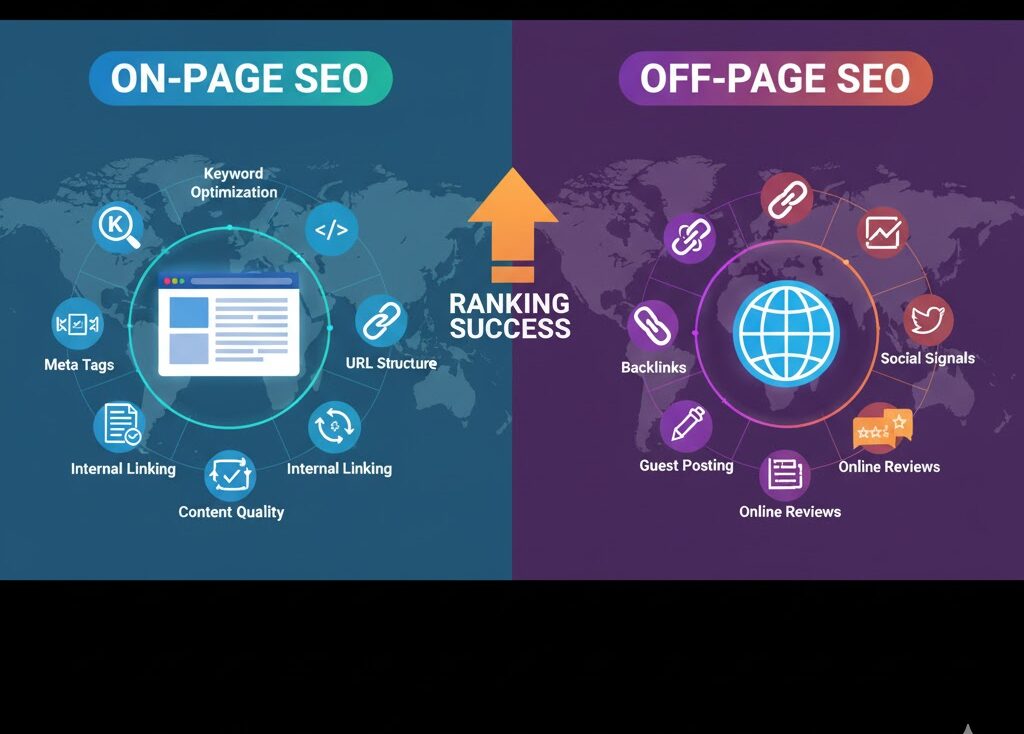
Keyword Optimization: Use relevant keywords naturally in your titles, headings, and body text.
Meta Tags: Write compelling title tags and meta descriptions.
URL Structure: Keep URLs short, descriptive, and keyword-rich.
Internal Linking: Connect related pages to improve navigation and crawlability.
Content Quality: Ensure your content provides real value and answers user intent.
What is Off-Page SEO?
Off-page SEO happens outside your website and focuses on building your reputation and authority.
Key Off-Page SEO Factors:
Backlinks: Earn links from trusted, relevant websites.
Social Signals: Shares, mentions, and engagement on social media can enhance brand authority.
Guest Posting: Contribute content to reputable platforms in your niche.
Online Reviews: Positive feedback improves credibility and trust.
Why You Need Both
Think of SEO like building a house — on-page SEO is the foundation, while off-page SEO is the reputation. You need both to rank high and stay there.
Without on-page SEO, Google can’t understand your site.
Without off-page SEO, Google won’t trust your site.
A balanced approach ensures your website is both technically sound and authoritatively recognized.
Conclusion
Successful SEO is not about choosing between on-page and off-page — it’s about integrating both to deliver the best possible user experience. Optimize your content internally, build authority externally, and your rankings will follow.